If a Guinea Pig Had Kids Can She Get Pregnant Again Will the Dye
Republic of guinea Pig Facts
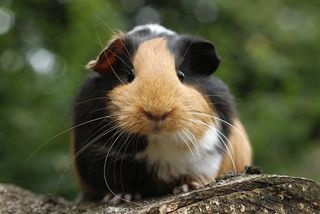
Republic of guinea pigs, as well chosen cavies, are a domesticated species of rodent (Cavia porcellus). They were originally native to Southward America. However, they take been popular for thousands of years every bit pets and as nutrient, and this species no longer exists in the wild.
The Incas domesticated Guinea pigs more than 3,000 years ago. They bred them every bit pets and for nutrient and offered them every bit sacrifices to their gods, co-ordinate to Sharon Lynn Vanderlip, writer of "The Guinea Pig Handbook" (Barron'south, 2003). Selective breeding resulted in variations in coat color, patterns and texture, as well every bit flavor subtleties, Vanderlip wrote. Around the end of the 16th century, Spanish conquistadors took Guinea pigs from South America to Europe, where they became popular pets amidst Elizabethan society, according the National Geographic.
Not from Guinea & not a sus scrofa
No one is really sure where the name Guinea pig came from. According to Vanderlip, some historians speculate that the roasted meat reminded Europeans of suckling pigs. Some think Republic of guinea pigs got their name from the squealing sounds they make. The proper noun may come up from the price of a Republic of guinea sus scrofa in 16th-century England: 1 guinea. Some researchers say ships leaving the port of Guiana in South America or Guinea in W Africa may accept carried the animals to the European market.
The picayune hirsuite animals too accept identity crises in other languages, Vanderlip wrote. In Federal republic of germany, they have been calledmeerschweinchen (fiddling sea pigs). In France, they arelapins de Barbarie(Barbary rabbits). And in Portugal, they are chosenporchitas da India (little pigs from Republic of india). Cavies (pronounced kay-vees) can't seem to milk shake the pig connotation; even its species name,C. porcellus, means "piddling pig" in Latin.
Size & appearance
Republic of guinea pigs are tailless rodents that weigh between i.five and 2.five lbs. (700 to 1,100 grams), according to the Animal Diversity Spider web (ADW). Their compact, cylindrical bodies range from 8 to 10 inches (20.three to 25.4 cm) long.
Their ears are small and petal-shaped and their eyes are fix on the sides of their heads. They have small, triangular mouths, which contain xx teeth. Like other rodents, their teeth grow continuously, and Republic of guinea pigs must chew or gnaw constantly to continue them from growing too long.
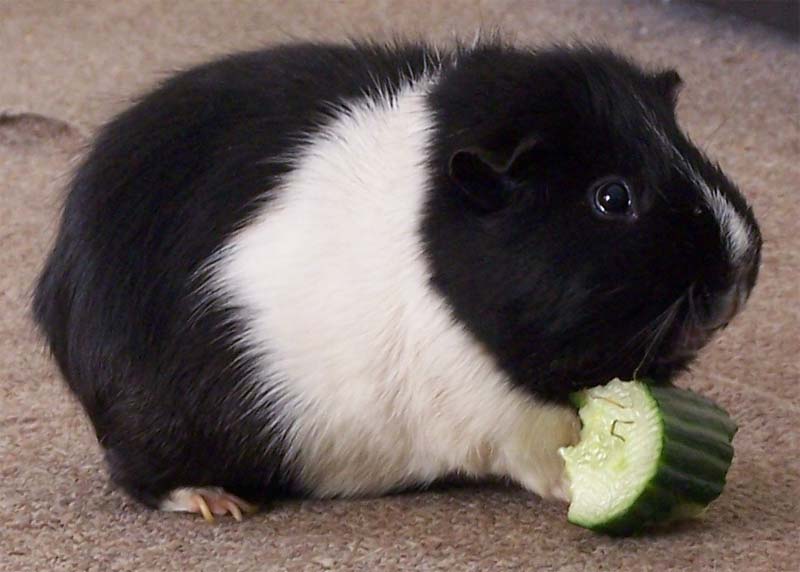
According to ADW, there are 13 ordinarily recognized types or breeds of guinea pig: American, American satin, Abyssinian, Abyssinian satin, Peruvian, Peruvian satin, silkie, silkie satin, teddy, teddy satin, texel, coronet and the white crested. These breeds are characterized by differences in hair color, pilus texture, the sheen of the pelage and the colour patterns of the pelage.
Habitat
While domesticated Guinea pigs are no longer plant in the wild, they practice have some cousins, likewise called Republic of guinea pigs, in S America that live in forests, savannas, mountainous grasslands and bushy areas. According to the International Union for Conservation of Nature (IUCN), the Brazilian Republic of guinea pig is found in Brazil, Venezuela, Colombia, Ecuador, Guyana, Bolivia, northern Argentina, Uruguay and Paraguay. The Moleques do Sul Guinea hog is from Moleques Island do Sul, a 25-acre (10.5 hectares) island in Santa Catarina, Brazil. The shiny Guinea pig is found in littoral areas of southeastern Brazil. The greater Guinea squealer occurs in southern Brazil and Uruguay. The Montane Guinea pig ranges from northwestern Argentina and northern Chile to Peru.
Habits
Guinea pigs are very social and are herd animals. They like to exist with others of their ain kind, just also thrive from human amore. They are crepuscular, which ways they are most active during dusk and dawn. When they are awake, Republic of guinea pigs spend their time feeding, grooming or investigating their cage, according to the ADW.
Diet
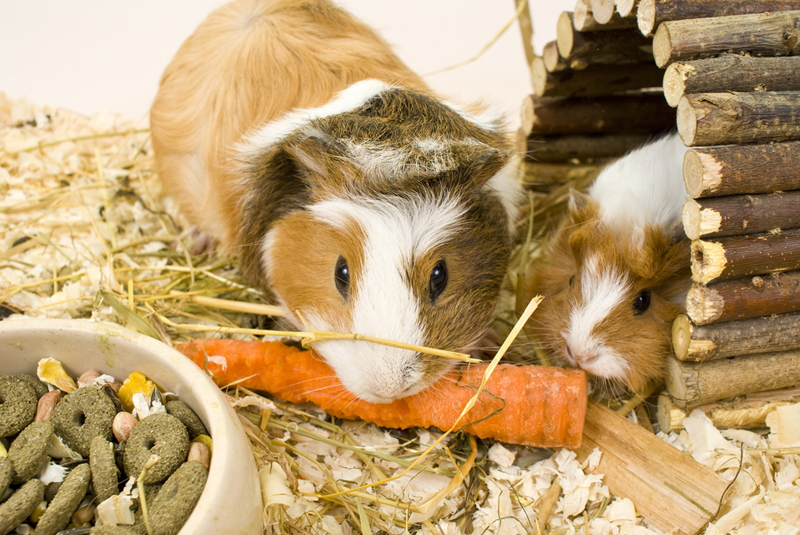
Republic of guinea pigs are herbivores, meaning they exercise not eat meat. Typically, domesticated Guinea pigs swallow candy pellets fabricated from alfalfa hay or timothy hay and vitamins and minerals that Guinea pigs need to be healthy.
They also love vegetables and fruits such every bit kale, mustard greens, bell peppers, carrots, bananas, apples and blueberries. Unlike other minor animals, Republic of guinea pigs need Vitamin C to stay good for you, according to The Homo Gild of the U.s..
Guinea pigs don't demand to beverage if they eat moist foods, according to Encyclopedia Britannica. Special water bottles that hang from the cage bars are often a expert way to supplement h2o needs for pet Republic of guinea pigs.
Offspring
Male person cavies are called boars and females are called sows (once more with the pig nomenclature). Babe Guinea pigs are called pups. Sows take a gestation period of 59 to 72 days and give birth to litters of 3 or four babies on boilerplate, although they can accept as many as 13 babies at one fourth dimension. Though pups nurse for diet, they tin can also eat solid food as soon as they are born.
At three weeks, the babies are weaned, and they are fully mature in 2 to iii months. Co-ordinate to The Human being Club of the United States, Guinea pigs live longer than many other small rodents. They typically alive five to seven years.
Nomenclature/taxonomy
The taxonomy of the Guinea pig, according to the Integrated Taxonomic Data Arrangement (ITIS), is:
- Kingdom: Animalia
- Subkingdom: Bilateria
- Infrakingdom: Deuterostomia
- Phylum: Chordata
- Subphylum: Vertebrata
- Infraphylum: Gnathostomata
- Superclass: Tetrapoda
- Grade: Mammalia
- Subclass: Theria
- Infraclass: Eutheria
- Order: Rodentia
- Suborder: Hystricomorpha
- Infraorder: Hystricognathi
- Family unit: Caviidae
- Subfamily: Caviinae
- Genus:Cavia
- Species:Cavia aperea (Brazilian Republic of guinea hog);Cavia fulgida (Shiny Republic of guinea pig);Cavia intermedia (Moleques do Sul Guinea pig);Cavia magna (Greater Guinea hog);Cavia porcellus(domesticated Guinea grunter);Cavia tschudii (Montane Republic of guinea pig)
Conservation status
Domesticated Guinea pigs and most of their wild cousins are in no danger of extinction and are listed as "Least Concern" by the IUCN's Red List of Threatened Species. However, at that place were but 42 Moleques do Sul Guinea pigs left in the wild as of 2008, when the last assessment was made, and that species is listed every bit "Critically Endangered," the IUCN's highest threat level.
Guinea pigs every bit "guinea pigs"
According to Vanderlip, since the 1800s, Republic of guinea pigs accept been used in laboratories to study nutrition, genetic, toxicology and pathology. "Republic of guinea pigs have done more than their fair share to contribute to medical science and to the health and well-being of humans and animals worldwide," she wrote.
According to ADW, Guinea pigs are used as subjects in biomedical enquiry investigating scurvy, tuberculosis, juvenile diabetes, and pregnancy complications.
Additional resources
- National Center for Biotechnology Information: Comparison Between the Domestic Guinea Pig (Cavia aperea f. porcellus) and its Wild Ancestor, the Cavy (Cavia aperea)
- ASPCA: Care of Republic of guinea Pigs
- Canadian Federation of Humane Societies: Guinea Pigs

Alina Bradford is a contributing author for Live Science. Over the past sixteen years, Alina has covered everything from Ebola to androids while writing health, science and tech articles for major publications. She has multiple wellness, prophylactic and lifesaving certifications from Oklahoma Country Academy. Alina's goal in life is to endeavor as many experiences as possible. To date, she has been a volunteer firefighter, a dispatcher, substitute teacher, artist, janitor, children's book author, pizza maker, event coordinator and much more.
Source: https://www.livescience.com/50658-guinea-pig-facts.html
0 Response to "If a Guinea Pig Had Kids Can She Get Pregnant Again Will the Dye"
Post a Comment